
Asian Century
New Challenges Demand New Solutions

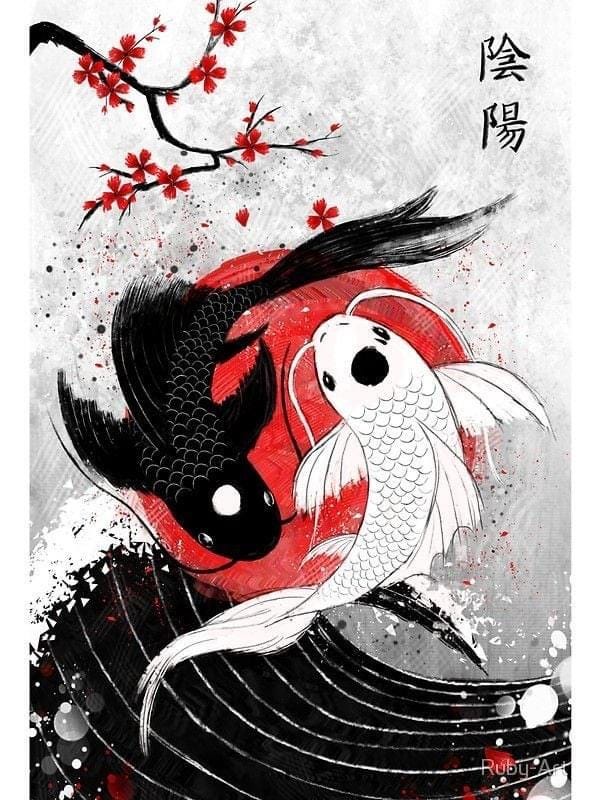
Someone asked me what the recent conflicts between the U.S. and China are about. The confusion is understandable because we usually get caught up in all the micro aspects of the question and never drill down to the macro differences in cultures causing misunderstandings and conflicts. I would also broaden it out to the basic conflicts of the West and the East not simply national differences.
Throughout most of human history civilization was centered in the East and Middle East. Art and technology generally migrated from the East to the West. Even during the Roman Empire, most of what we now call Europe was considered barbaric. Asia became renowned for its culture and splendor while the West languished in the Dark Ages and squalor. One looked to the East for the latest in arts, science, medicine, and culture.
This remained unchanged for centuries until Venice merchants made rich by trade with the East challenged the feudalism of the Catholic Church developing the Renaissance and the concept of humanism and the Protestant Reformation. In the West, we tend to think of this shift with rose-colored nostalgia but the shift from collectivism to individualism was shocking and profoundly bloody with more than a century of religious and philosophical wars which combined with famine and plague left much of Europe depopulated and primed for a “reboot.”
The East continued to enjoy its wealth and culture and found no need for a “re-birth” and all the suffering accompanying it. Eastern philosophies valued collective balance and harmony and long-term stability over individual aggrandizement. They chose a more humane slow road to growth rather than the chaos of disruption.
At the core of Western Protestantism is a belief that everyone is responsible for their own “salvation” and God favors those who closely follow His commands. This Old Testament God punished those who were too “savage” to follow the One Path to salvation with all its racist implications. Becoming individually rich while exploiting “heathens” was embraced with the religious zeal that spawned it.
But the accumulation of wealth required force to protect it so huge amounts of talent and energy were channeled into military “sciences.” Freed from the harness of collectivism, the West was encouraged, impelled even, to disrupt the status quo and grab anything of value for oneself. Imperial armies needed uniforms, weapons, and supplies, so the Industrial Age emerged to fuel the needs of the Age of Imperialism and the eventual colonization of the East.
The problem is that a basis of individual greed and rapacious progress is an inherently unstable social system. Short-term success has led to long-term consequences such as World Wars, overpopulation, climate change, and disruptive technological change. The Western experiment in individualism has failed and the world is now looking for a more sustainable and equitable way to support 8 billion people for the long haul. It again is time for a major philosophical reboot and an upgrade to our global operating system.
China has an eons-long reputation for being the Middle Kingdom - the source of the world’s wisdom and culture. It already had a good foundation of collectivism and a history of Confucian sociological pragmatism and meritocracy. All that was needed was a boost of entrepreneurship borrowed from the West to develop the system of socialistic capitalism that seems to fit the zeitgeist of the 21st century.
The conflict today is between an outdated concept of selfish individualism against a revamped idea of collective entrepreneurship. Sure, there is the argument between individualist democracy and traditional Asian hierarchical, merit-based authoritarianism, but most of the world until the end of WWII operated on similar systems of monarchy.
The current Western system is very new, and its track record is poor for large, diverse populations. Both cultures have complementary strengths, and several hybrid systems are probably emerging combining the dynamics of both. Notice that militaries and corporations worldwide are based on merit-based hierarchical structures. Government now is too complex and critical to be left to populist amateurs.
The transition, like the one preceding, will not be without chaos and conflict, but the imperatives are more dire, and the timeframe will be much shorter. In the end, the 21st century will present challenges requiring order and harmony making it the Asian Century.
Interesting essay on a complicated subject. Disturbing to Americans who frame current conflicts in Ukraine, Taiwan and elsewhere as Western-style democracy and freedom vs. Russian-Chinese authoritarianism and collectivism.
Yes, you are probably correct that the changes will be gradual and currently are hiding in the cacophony. The deciding factor will probably be demographics.
Our Western culture was designed for small, monocultural societies while Asians have had to reckon with large multicultural populations for eons. Confucian ideas of order and harmony allowed large nations to flourish in Asia centuries before Europe was anything more than brutish tribes. Larger population density and greater diversity will demand a level of social order not particularly common to much of the West since the Renaissance.
The concept of nation-states is a relatively new idea for Europeans largely emerging after the Thirty Years Wars in the 1600's and the American Revolution in the late 1700's. Italy, for instance, did not become a nation until 1861. Monarchies ruled the land until the end of WWII and modern democracies only emerged out of the ashes of that holocaust.
Ironically, a listing of the most content populations is in democratic socialist norther European nations with loose ties to Old World Catholicism. I once was talking to a Saudi student that arrogantly announced that Saudis were Asian. I asked him to point to where God was. If he pointed outwardly to the heavens, he was Western/Middle Eastern. If he pointed inward, he was Asian. This philosophical difference is crucial. Western cultures are formed on a basis of duality - sacred vs. profane.
Asian cultures tend towards unity and balance rather than the dramatic split that fuels Western restlessness and hostility. The core principle of Buddhism is compassion, where one's self becomes integrated and merges with the greater Self in equanimity and harmony. These will be important skills in our very crowded and multicultural future.
Yes, we are seeing the beginning of the schism as played out in the U.S. between the compassionate left and the racist dualist right. The right clings to Christian dualism while the left tends to be agnostic or increasingly inclined towards Eastern philosophies. I see a lot of this in California and I am sure it has spread throughout the East Coast and more progressive parts of our dysfunctional nation. It is not by chance that the Tibetan Dalai Lama is held in high regard throughout the Western world even in contemporary U.S. Yoga classes are common even in the red heartland of America and a majority of us are now not affiliated with a church.
We, as you point out, are in the void. We are no longer what we were, but not cognizant of what we are becoming. What that will look like is probably typical of Scandinavia with high levels of compassion for fellow citizens and low tolerance for dualistic religiosity. Will we instantly become Buddhists? No. But will we increasingly incorporate Buddhist principles of compassion and harmony in our cultural philosophies? Yes. It will be an evolution, not a revolution.
The task of living peacefully with billions of other people will demand a shift away from racist dualism towards some sort of inclusive compassionate acceptance of others. Yes, I am sure old ways will die hard like they did during the religious wars following the Renaissance, but shift happens and we can choose to either embrace it or struggle and suffer. Asia has the map. We might be wise to peek over their shoulder rather than blunder in the dark.